
ABSTRACT
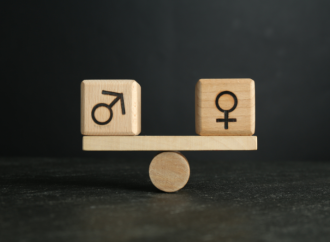
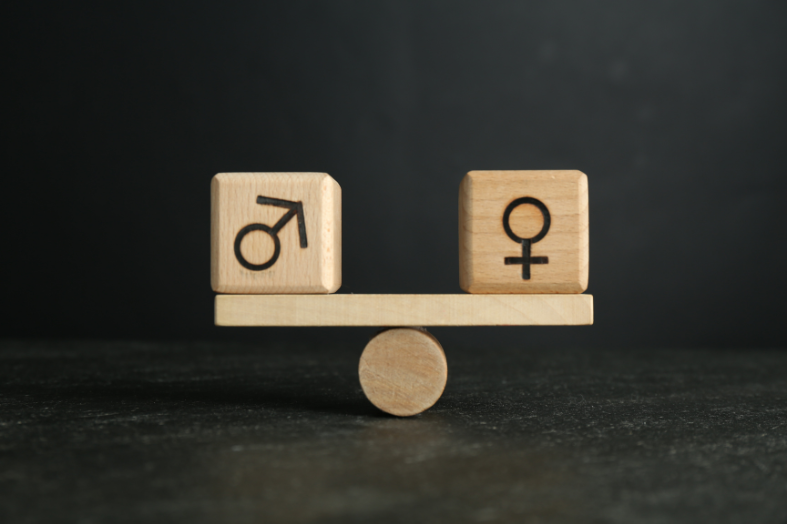
The interview explores patriarchy as a relational and psychological structure that profoundly shapes subjective experience, power dynamics, and the quality of interpersonal contact. From a Gestalt perspective, patriarchy is described as a set of cultural introjections that define rigid gender roles, producing suffering, disconnection, and difficulty accessing one’s authenticity. These introjects influence both the masculine—through the repression of vulnerability and identification with models of domination—and the feminine—through the renunciation of voice, autonomy, and the right to self-affirmation.
The conversation explores how these dynamics recur in the therapeutic field, in couples’ relationships, and in groups, generating unrecognized patterns of power that can rigidify roles and compromise the quality of contact. Bellini and Pizzimenti distinguish power as domination, based on hierarchies and crystallized roles, from power as potentiality, which facilitates creativity, exchange, and fluctuating leadership. Clinical practice reveals how individual and relational suffering is often linked to the attempt to adhere to patriarchal roles incompatible with the organismic needs for connection and reciprocity.
Gestalt therapy offers a theoretical framework for recognizing and deconstructing such introjections through field awareness, work on the contact boundary, and restoring the possibility of co-creating relationships based on mutuality. The theme of power in intimate relationships—including patterns of dependency, gaslighting, victim/perpetrator polarizations, and erotic dynamics—is discussed as an expression of internalized structures, but also as a potential space for transformation when power is allowed to circulate fluidly.
The interview finally highlights how clinical training can become a privileged space for questioning patriarchal models, promoting more egalitarian, conscious, and mutually caring relational practices.
INTRODUCTION
My interest in the concept of patriarchy and its practical implications stems primarily from the fact that I am a woman raised in a patriarchal society. In this context, I indirectly acquired a set of beliefs and convictions typical of patriarchal societies.
To fully understand the impact of patriarchy on our lives, it is essential to take a step back and reflect on its historical development. Although patriarchy has emerged in various cultural contexts, its roots lie primarily in the institutionalization of male supremacy, which evolved with the emergence of agricultural and, later, industrial societies (Goettner-Abendroth, H. 2009).
This social structure led to the creation of power hierarchies that excluded women from leadership and decision-making roles, limiting their freedom of expression and autonomy. It is also interesting to see how several archaeological discoveries involving elements of ancient matriarchal societies have been read and interpreted through a patriarchal lens (Goettner-Abendroth, H. 2009).
The influence of the patriarchal model extends beyond history: it has shaped laws, institutions, religious norms, and educational systems, creating a cultural framework that still influences our way of living, relating, and practicing psychotherapy today (Naranjo, C. 2005).
Understanding this historical evolution allows us to see how patriarchy is not just a social structure of the past, but a legacy that continues to shape our individual and collective psychology (Snider, N., & Gilligan, C. 2012).
We live in an environment permeated by constant and persistent suffering, yet this suffering is incredibly difficult to define, as it manifests itself in nebulous and elusive ways (Snider et al., 2012). Growing up in a particular context, we absorb and internalize its characteristics without asking ourselves whether they truly correspond to us, whether we truly want to adhere to that system or not. This process in Gestalt therapy is called “introjection” (Pizzimenti, Rivetti, 2020).
Accepting social beliefs and structures is, ultimately, a survival strategy, a creative adaptation to the surrounding environment that represents the primary source of sustenance. Only in adolescence, often with a certain fury, and later in adulthood, sometimes with more moderation, do we begin to question beliefs that no longer feel like our own. However, when these beliefs are widely shared, taken for granted, and so deeply rooted in the deepest social strata, as in the case of patriarchal principles, the result is a discomfort whose cause we cannot clearly identify (Snider, N., & Gilligan, C. 2012).
There are aspects of the way we experience social relationships that, unfortunately, work against our well-being. These aspects, though adverse to our equilibrium, are difficult to scrutinize and even more difficult to bring to light. (Snider et al., 2012).
A key aspect of patriarchy concerns the construction of gender identities, which is strongly influenced by psychological theories and cultural models (Naranjo, C. 2005). On the one hand, the traditional ideal of masculinity promotes a strong, dominant man, devoid of vulnerability and capable of independent action. On the other, the ideal of femininity implies subordination, limitless empathy, and self-sacrifice (Snider et al., 2012).
Patriarchy, as a dominant social structure, is deeply rooted in the cultural practices and psychological models that shape our interpersonal relationships (Bellini, B. & Magarelli, V., 2024) from birth. Cultural introjections—the beliefs and values we internalize without questioning them—play a fundamental role in maintaining gender inequalities. These introjections aren’t limited to outward behaviors, but penetrate deep into our psyche, shaping our ways of thinking, feeling, and acting. From an early age, we are bombarded with predefined and crystallized images, expectations, and roles, which push us to conform to the patriarchal model. Women who learn to “keep their place” and men who are raised to repress vulnerability are just some of the effects of these introjections. If not recognized and reworked, they can perpetuate a cycle of suffering and disconnection from our true selves (Snider, N. & Gilligan, C., 2012).
Gestalt therapy, which views the organism as a being in relation to the environment (Perls, F., Goodman, P., & Hefferline, R., 1951), offers a powerful tool for rethinking concepts of masculinity and femininity. It invites us to explore how these rigid gender models not only limit human potential but also create internal conflicts that prevent the full integration of one’s authenticity. The implications of these gender structures are reflected in the power dynamics within the therapeutic relationship and in the ways in which men and women interact, where the same inequalities that characterize patriarchal society are often unconsciously repeated (Pizzimenti, Bellini, 2022).
As living organisms, we are constantly connected to our environment, and we cannot speak of an organism without considering it in its environment: this is the concept of “field,” a fundamental concept in Gestalt therapy, introduced by Kurt Lewin (1953) and subsequently discussed by Fritz Perls, Paul Goodman, and Ralph Hefferline in relation to Gestalt therapy (1951). The “field” is conceived as the smallest indivisible particle between organism and environment. We are constantly and inextricably immersed in and connected to our surroundings; no organism exists separate from its environment. To immediately understand this concept, consider the fact that no living being can survive without breathing, and air, essential for life, is a fundamental component of the environment (Vygotsky, L. S., 1986).
In this regard, Italian etymological dictionaries, such as Panzini’s “Dizionario Etimologico” (1932), offer an interesting perspective on the terms “individual” and “organism.” While “individual” refers to a unique and separate entity, not necessarily a living being, “organism” always describes a living being organized into a complex structure, constantly in relation and connection with other structures and with the environment (Treccani, 2025).
From a field perspective, the concept of independence as understood in patriarchy—which extols individualism and the idea of the “superhero” and “superheroine” who need no one—is nothing more than a “neurotic lie.” An illusion that inevitably leads to loneliness and suffering, with a very high price to pay: the renunciation of others and of love (Snider & Gilligan, 2012).
No organism can survive isolated from its environment. When this happens, it inevitably faces death (Malucchi, M., 2003).
If the organism is always connected to its environment, and humans have a vital need for this connection, why is individualism extolled in our patriarchal system?
This is a contradiction that clashes with our vital needs for love and affection and generates discomfort in relationships (Fromm, 1956). We constantly need to feel connected to others, yet we find ourselves adhering, more or less consciously, to a model that promotes individualism, competition, power struggles, and supremacy over others. This distances us from satisfying the true human need for connection: the need for an authentic encounter with the other, which enables well-being and growth (Fromm, 1956).
One might hypothesize that we act out of a genuine and vital need for connection, but this genuine need is often replaced by a substitute need (Perls, Hefferline, Goodman, 1951), embodied by the patriarchal introject that promotes individualism and supremacy. Thus, what we obtain is only increasing detachment, isolation, and a persistent sense of dissatisfaction, as no true encounter with the other occurs.
So what drives men and women to create power-unbalanced relationships? Why does a man give up his emotionality and vulnerability? What leads a woman to give up her voice, her fulfillment, and her autonomy? These differences, apparently linked to gender, are not a matter of genetics. It’s not true that boys don’t cry and girls aren’t ambitious. Rather, these inequalities lead to one word: patriarchy (Snider, N., & Gilligan, C., 2012).
At the Gestalt School of Turin, I was fortunate to meet teachers who, in their work as a group of psychotherapists, as an association of professionals, and in their training sessions with groups of students, constantly question the patriarchal model. This approach deeply moved me and inspired me to explore, with curiosity and enthusiasm, the concept of patriarchy and its implications for therapeutic work.
From these insights, this interview with two professors at the Turin School of Gestalt Psychotherapy, Barbara Bellini and Mariano Pizzimenti, was born. They have long been engaged in discussions on the topics we are exploring, offering valuable contributions. I sincerely thank them for this further opportunity for growth.
The interview will delve into the concepts of patriarchy and matriarchy, seeking to clarify their meanings, the advantages and disadvantages for men and women in adhering to a patriarchal model, as well as the suffering this generates. We will analyze the difficulties and complexities encountered when attempting to escape a patriarchal model and embrace the equality and unity of the matriarchal model. We will also examine how power is exercised among people in a patriarchal context.
INTERVIEW
Mara: What is patriarchy, in your opinion? How would you define it?
Mariano: This is a very general question: what is patriarchy?
Barbara: It might be helpful to start with the etymology, which derives from “patriarca”…
Mariano: Let’s see what the etymology of the word “patriarcato” is.
Mara: It seems to me that it derives from “archè,” which should be connected to both dominion and origin.
Mariano: It means “the law of the father.”
Barbara: So if it’s the law of the father, the etymology already refers to power relations between people.
Mariano: Head of the race, lineage, descent, command, that’s what it means.
Barbara: In the word, we find a reference to the “power relationship” and to the “father,” and therefore, by extension, also the issue of gender.
Mariano: Above all, I believe patriarchy is something that has gradually established itself… if we look at history, some American researchers see patriarchy as something that began to take hold with the development of agriculture. That famous story about when, ten thousand years ago, we stopped being hunters and gatherers and began to be farmers, and thus the entire concept of possession and ownership began to develop, because land began to become property, and means became property.
Barbara: When there were hunters, property was a burden, whereas after the agricultural revolution, property was born and it acquired value. According to Christopher Ryan and Cacilda Jetha, two American researchers who wrote a book that has also been translated into Italian, titled Sex at Dawn: How We Mate, Why We Stray, and What It Means for Modern Relationships, this shift towards the agricultural revolution created a gender divide related to property and power that didn’t exist before. In the hunting community, there were no significant differences in terms of decision-making or power; roles were more interchangeable, while more rigid roles appear to have begun to exist at the beginning of the agricultural revolution. At that point, a person was needed to safeguard the home and property and care for the children, clearly instrumental in inheriting the assets.
Mariano: And they were also important workers, the famous agricultural workers.
Mara: So in this sense, patriarchy played an important role, it had a significant meaning, during that period.
Barbara: According to other sources, including Goettner-Abendroth, human history saw a transition from the patriarchal models of the Paleolithic and Neolithic to hierarchical patriarchal structures in the Bronze Age. Matriarchy is a model of egalitarian, cooperative, peaceful, spiritually female-centered society, not a form of domination. This author aims to rewrite human history from a non-patriarchal perspective through an inductive approach, based on the analysis of anthropological, ethnological, and archaeological research, and her own field experience, to overcome the patriarchal prejudices that have historically distorted historical interpretations. Examples of matriarchal and matrilineal structures still exist in various parts of the world. Here, the source of power is the community assembly, often composed of elder women, rather than an individual or hierarchical authority (chief, father). Gender roles are equal and complementary. Politics is based on consensus, with power delegated to men only in a functional sense. This means that men were responsible for hunting, defense, and trade, but always as community officials. Decision-making by consensus means that discussions are held until a shared agreement is reached, which is very different from the democratic method where the majority wins. In the former case, everyone wins; in the latter, the power struggles we know so well from our politics begin. Furthermore, the economy is based on giving and reciprocity.
Mariano: This reading is interesting because it helps us differentiate patriarchal or matriarchal models from patrilineal or matrilineal models. The difference is substantial, even if the two terms are often confused. Matrilinearity/patrilinearity is a legal and genealogical fact, not necessarily political and cultural. In matrilineal societies, children belong to the mother’s clan; the maternal uncle often has a stronger educational and authority role than the biological father. Patriarchy, on the other hand, concerns the distribution of power. Theoretically, a patriarchal system can exist even in matrilineal societies, although reality shows us that matrilineal tribes like the Navajo in North America, the Khasi in India, and the Minangkabau in Indonesia have developed a non-patriarchal cultural system. Patriarchy must not be confused with men being in charge. Patriarchy is rather a model of sociality, in which private property is important, possession is important, where concepts of hierarchy develop, where there are those who own more and those who own less. The word pater brings us to the term patria, which is the land, the patrimony, and therefore possession. The important thing to emphasize, however, is that when we differentiate patriarchy from matriarchy, we don’t mean so much a government of men or a government of women, but rather a “government”; So, in the case of patriarchy, a vision of human relationships in which the important figures are domination, possession, hierarchy, and property, while in the case of matriarchy, a social vision of human relationships characterized by participation, the importance of relationships, and care. These are the aspects that distinguish patriarchy and matriarchy.
Barbara: In the last weekend of couples training at the psychotherapy school, we saw how there is a different way we can consider power as it impacts everyday life at the micro level: power as domination or power as potentiality and creativity. Power as domination refers to roles, so it is a crystallized power, and the roles are more rigid. In our patriarchal society, there are very defined power roles, and power is real. For example, law enforcement or judges can force citizens into prison or subject them to more or less restrictive restrictions on their freedom. Or if we look at the school system, many teachers base learning on power roles, rather than on relationships and motivation. The same structure is present in businesses, the labor market, and the economy.
In power based on domination, those in a dominant position have the power to decide what those below them should do. The drive for power has become so deeply rooted in the human mind that it has become part of our way of experiencing relationships from childhood. As Michela Murgia states in her book “Shut Up,” from the moment a person occupies a hierarchical role, it is inevitable that they will exercise a dominant power based on a logic of subtraction and defense. Those who gain power do so by depriving someone of it and must then devote a great deal of energy to maintaining it, rather than exercising it. It is a model.
Mariano: If we look again at the etymology (perhaps we’ll return to patriarchy) of the word “couple,” it doesn’t speak of a duality but of a cut, a separation. The couple is the union of those who are separated; indeed, it speaks precisely of separating. In fact, “couple” in French is “couper,” to cut, “couple,” and they have the same origin. The fact that the couple has become something that must necessarily be made up of two people…when in reality it’s the bringing together of those who are separated; there could be three, four, and we could still speak of a couple, of coupling. It’s very similar to the word sexual, where “sex” comes from “secare,” which again means to cut. They are all words that speak of this bringing together, uniting what is separate.
Barbara: So, returning to couples, sexuality plays an important role in experiencing power, not in the sense of domination, as the most patriarchal society teaches us from an early age with roles, ways of experiencing education and work, etc., but rather a power that is interchangeable, a power as possibility, in which all parties involved have the ability to influence each other, where there can be intersubjectivity. Where there is domination, intersubjectivity fails.
Mariano: There is objectification.
Barbara: There is objectification and there is no exchange of power roles. So this then leads to an interesting aspect of sexuality not only in couples but also in groups, or, if you like, the erotic aspect of teaching that puts teacher and student on equal footing. So, a sexuality that goes beyond the roles in which one teaches and the other internalizes, but where there is eros and therefore a level playing field that goes beyond roles, which focuses on interest, on becoming excited, on uniting, on empowering one another, where the student has great value.
Mariano: So when we talk about patriarchy and the fight against patriarchy, it’s important to clarify that we’re talking about this. It’s not something against the male or against men, but against this dominant, possessive, hierarchical vision, with crystallized roles. That’s what we’re talking about with “the fight against patriarchy.”
Barbara: I want to reflect on feminism, which was a movement that led women to have more power, to be seen, to emerge, to equal rights, so theoretically it was a fundamental movement. What we tend to do, however, is reverse the roles, meaning that women have more power, while that’s not the case; overcoming patriarchy isn’t that…
Mara: So you’re emphasizing the confusion surrounding matriarchy, often understood as the domination of women… but that’s not what’s meant by the critique of patriarchy.
Mariano: Yes, this is a very reductive and fundamentally flawed vision, because it equates patriarchy and matriarchy with masculine and feminine; therefore, it continues to maintain a very binary logic, which is once again a logic of crystallized roles.
Mara: So, the criticism you’re making of patriarchy, of the rigidity of roles, of domination, of hierarchy, is the same criticism that can be made of any other type of discrimination?
Mariano: I believe that discrimination is a consequence of patriarchy.
Mara: What do you mean?
Mariano: In discrimination, we tend to decide which significant differences serve to create hierarchical concepts of power, superiority, and inferiority, but this is patriarchal logic. In a logic where there are no crystallized roles, where there is no domination and possession, it’s difficult to imagine a discriminatory logic, because, again, discrimination in itself is what helps differentiate; in itself, it only speaks of difference. When we talk about discrimination, we mean that difference becomes a way to establish who is greater and who is less, who is right and who is wrong, who is better and who is worse; therefore, it’s a way of exploiting differences, and this is precisely something we find in patriarchal logic. If we look at a matriarchal logic, which is that of participation, discrimination makes no sense, because there’s no advantage in having someone who is less than others. Because in participation, it’s important that everyone contributes, so discrimination becomes something hard to imagine in a matriarchal vision. The patriarch could be a man, a woman, a transgender person, a disabled person—anyone could be a patriarch.
Mara: It’s the dynamics of domination, possession, and hierarchy that characterize patriarchy… So, taking a step back, you were saying earlier, Mariano, that we need to distinguish between how patriarchy was born and how it was established, and the fact that men then took power…
Mariano: Yes, then this type of male-dominated society was created. It makes more sense to call them male-dominated rather than simply patriarchal. And probably, the risk is the same one Barbara previously cited as the limitation of feminism: that feminism has become about overthrowing the male, not overthrowing patriarchal power. Or rather, I’m not saying that feminism has become this, but it’s what has been attributed to feminism, while feminism was born precisely with the vision of overthrowing male power, but in the sense of patriarchal power. It’s true that, in our societies, the two are equivalent, but if they’re not distinguished, there’s a risk that patriarchy will find a way to survive, where perhaps the leaders become women.
Mara: Okay, I have another question: I’m very clear about the price a woman pays for living in a patriarchal model, and therefore I’m also very clear about the motivation to want to escape it, because in this patriarchal model, after all, power resides with men.
Mariano: Patriarchal societies have become chauvinistic, yes.
Barbara: Yes, there’s little room; women can’t say no…
Mara: If abandoning a patriarchal and chauvinistic model provides immediate benefits for a woman, are there advantages for a man? What can persuade a man to embrace a matriarchal model?
Mariano: Okay, I get it. It was the kind of objection they raised in ’68 to students about why they, intellectuals, were demonstrating with workers, even though they had all the advantages of remaining in capitalist society. Patriarchy is based on domination, but one of its most important characteristics, especially with regard to our work as psychotherapists, is that domination often becomes self-domination. Crystallized roles speak of prisons. If a satisfying life is one in which I enjoy being surrounded by objects I can dominate, then it becomes foolish at this point for a man to even think of challenging patriarchal logic. But if even a male realizes that in a world populated by objects, he himself becomes an object, and that satisfaction lies in having intersubjective relationships—that is, with human beings and living beings in which equality gives you the opportunity to experience emotions, to feel, and not have to control your emotions—then the matriarchal model becomes more satisfying. When we think of a patriarchal model of man, what comes to mind? The man who doesn’t cry, the strong man, who knows how to command—that is the patriarchal model. He is the man who has adapted to the patriarchal model, so for men, breaking away from the patriarchal model means gaining in terms of freedom to be.
Barbara: So, there are advantages both for those who dominate, for those who have more power, but also for those who are more submissive. So even those who give up power have advantages.
Mara: I hadn’t noticed that, it’s interesting. What advantages do you see?
Barbara: You don’t risk failure, you don’t risk putting your face on the line…
Mara: So a de-responsibility… you have less responsibility?
Barbara: Yes, you don’t risk making mistakes, you don’t risk self-determination, and what tends to happen is that the responsibility lies more with the other person, with the one who decides. It can be a comfort zone to hand over power to the one who dominates and let yourself be guided. So there are advantages for both: those who tend to decide and dominate apparently have more freedom, are more selfish, can allow themselves to focus more on their own ego, even if it’s only an appearance because, as Mariano said, it ends up being a prison, while those who tend to follow and submit adapt to the desires of the one who dominates and don’t risk failure. If roles become rigid, we’re no longer talking about two subjects, but “objects.” The partner ceases to be a subject and becomes an object of use: the dominant person satisfies their need for power, strength, and recognition. An object, in fact, has no will of its own to contend with; it is easily dominated. The dominated person, for their part, gives up their power for all the advantages already mentioned, and feels very important because they make the other person feel powerful. It’s complicated because sometimes these perverse relationships intersect with love, or are the only way people can “love,” if love can be defined. In fact, from the moment people cease to be subjects, they eventually discover they are alone, and hence the anger and contempt. The dominant person who manages to exert a lot of influence over the other finds themselves frustrated, because if the partner doesn’t take their power, then they have become an object. And if they are an object, they will never fully satisfy their need for recognition or love. There is no longer a meeting of two subjects. And so it’s also a disappointment for those who dominate, even if they seemingly have more power, strength, advantages… in reality it’s an illusion.
Mara: So there are advantages on both sides, but also suffering on both sides. Can you tell me more about the suffering on both sides, in your opinion?
Barbara: The suffering is that we witness a failure of intersubjectivity.
Mara: So it’s the same type of suffering for both?
Barbara: No, I don’t think it’s the same. Remaining within a gender binary for purely statistical reasons, if I put myself in the shoes of a woman subjected to the power of men, and therefore give up self-determination, I identify with a suffering linked to a lack of autonomy or self-realization: I can’t fulfill myself in life, I can’t be myself because I follow the desire and power of the other. Relinquishing power is a perverse way of having power because in this way the submissive person manages to keep the dominant other, giving him the recognition he seeks (by renouncing myself).
A different situation still exists when a man is subjected to the power of women. In my experience, this configuration manifests itself primarily within the home, because culture encourages men to have their own professional lives outside of it. So, we often see men subjugated by their partners, yet with their own power in the workplace.
If I put myself in the shoes of the dominant one, whether man or woman, I face suffering related more to isolation, to the ability to have relationships as equals, to reciprocal exchange and mutual influence.
Mariano: I believe the greatest suffering is linked to the fact that the relationship always ends up being primarily a relationship of power. Power is played out differently, but let’s keep in mind that patriarchy isn’t just violence; patriarchy also involves a great deal of caring for others. The patriarch takes care of the needs of others; it’s not just violence. The game is a game based on power. I remember a training session I did some time ago in a Russian group. We were talking about patriarchy and chauvinism when a therapist, a highly educated woman, said she was perfectly fine with men having power; she liked the idea that they could seduce him with their beauty and thus manipulate him.
Barbara: A manipulative power.
Mariano: The point is that everything hinges on power. I have power, if there’s an equivalence between male and patriarchy. I have the power in this society, as a male, to hold more prestigious roles, to be paid more, and therefore I have real power, if you will.
Barbara: Yes, more real.
Mariano: Yes, real power that allows me to do certain things.
Barbara: In the police force, quantitatively, there are 80% men and 20% women, so the positions of power are actually more masculine.
Mariano: What allows me to satisfy my desires and needs is the power I have. Seduction is another form of power, often attributed to women, based on turning oneself and one’s body into a sexual object. The power to attract a man or to give birth to children… It’s interesting that in patriarchal societies, women are only recognized with the power to give birth to children. But generally, we try to deny them the power to prevent their children. All the attempts to deny abortion, or at least to claim that abortion is something that also concerns men, somehow tend to take this power away from women, but no one talks about taking away their power to have children. Even when we discuss other types of fertilization, the objection is: “No, this power must remain with the woman.”
We have two ways of interacting with the environment and satisfying our needs: through a relationship of power and domination over the other, or through exchange, contact, and participation. In the first case, the relationship becomes one between objects; we lose intersubjectivity.
The price we pay for dominating the world is the loss of sensitivity and freedom. Barbara spoke earlier about “fear”: if I know you love me because I have power over you, there’s nothing I can do. I’ll always be afraid that deep down you might not love me and therefore replace me, as we often replace used objects. I’ll never be sure of your love, because I know you love me because I have power, therefore I serve you. You see this suffering in those on the other side as well. If a woman’s power lies in beauty, the dynamic occurs when beauty is lost. If power lies in having children, what happens when I don’t have the opportunity to bring children into the world?
Barbara: The difference is that in women, or in any case in those who are submissive, if we want to exclude the binary logic of the sexes that makes less and less sense today, the loss of beauty, advancing age, etc., has to do with a lack of self-realization. If I can assert myself (economically, culturally, existentially, relationally, etc.), I no longer “need” a man to give me all these things. I can make freer choices, based on exchange and growth with another human being, rather than on use and dependence. This is a paradox: the dominant suffers from “dependence,” from feeling loved and from the act of loving, while the submissive suffers from autonomy. Perhaps this also speaks to the intentionality present in victim-perpetrator, dominant-dominated relationships.
Mara: In what sense?
Barbara: It’s a projective mechanism, where the other has resources that I don’t have and that I would unconsciously like to develop, through a process of fusion and osmosis. In every love, there is an intentionality, that is, a tension toward the other, toward something I lack that could complete me. The illusion is that it’s the other who completes me, while the lack is within us, speaking of our fears and the abilities we’d like to bring into play, if only we had more courage and more support. Statistically, women tend to be more afraid of exposing themselves, of confronting others, of saying no, while men are more afraid of letting go, of loving and feeling loved. But this is a pointless discussion, because now the fears are blending together, as are the differences between men and women, which for me aren’t biological, but 90 percent cultural.
Mariano: Being stuck in a binary logic, for me, speaks once again of power. This emphasis on man and woman is one of many dichotomies and binarisms. If we adopt a vision of relationships based on contact and therefore on the encounter of differences, on participation, we fall outside of a binary logic because the differences are many, and the ways of participating are varied. On the contrary, within a logic of power, interactions are centered on power, on increasing or defending it. I believe this is also one of the reasons why within patriarchal societies, there tends to be a binary vision of man-woman, male-female, husband-wife. When there are two poles, it’s easier to establish a hierarchy of power, where one is up, the other is down. When we introduce so many differences (like what’s happening in the field of sexuality with the LGBTQIA+ movement, where the final “plus” marks the movement’s openness to all forms of difference that human beings can embody), the emphasis is no longer on defending the interests of individual categories (lesbian, gay, bisexual, etc.), deciding what’s better and what’s worse, what’s more valuable and what’s less valuable, who has more rights and who has fewer. If the movement’s boundaries remain open in a participatory logic, then power is dispersed among everyone and becomes potential energy. It ceases to be power in terms of crystallized roles because they become too many. To be able to crystallize, roles must be fewer; to be able to exercise power, power must be centralized, and that’s when someone becomes more powerful.
Mara: Do you see a risk in this, in distributing power?
Mariano: The risk is that movements that tend to create more differences and support difference (see the ’68 movements, the feminist movement of the last century, the LGBTQIA+ movement, etc.) will be discriminated against: there are attempts to devalue them, to eliminate them or to take them over, to make them fashionable, or to make them fit into a logic of power, which becomes a clash between men and women, a clash between heterosexuals and homosexuals, etc. When it becomes: heterosexuals, gays, lesbians, transgenders, asexuals… everything becomes much more complicated in terms of power, in the logic of power, in the management of power.
Barbara: Yes, it becomes more difficult to enter into binary logic.
Mara: Okay, so if we go back for a moment to the fact that there are both advantages and disadvantages in both roles…
Mariano: In our view, there is more suffering than advantages.
Mara: More suffering than advantages… So this should change something, if there is more suffering than advantages…
Mariano: Well, this is why we keep trying to change something, except that…
Barbara: It’s just that it’s difficult to give up the advantages of power, for anyone who embodies any social role. It probably requires a great deal of awareness and internal confidence… I don’t know, I’m thinking a bit about our school, a work environment where we’re trying to carry out an experiment specifically regarding the management of power. It’s the only school in the FISIG (Italian Federation of Gestalt Schools and Institutes) that is a fully-fledged cultural association. Schools generally belong to one or more owners, who therefore have power and economic interests. Succession occurs through the transfer and sale of property, and decision-making is by majority vote or imposition from above. The purpose of power here is to control and maintain hierarchy, and a corporate act sanctions it. We’re conducting, if you will, a bit of a social experiment, to see how we manipulate power within the group, and it’s not easy because we don’t have cultural models to support us. It’s something we’re also trying to see if it can work. At the moment, it’s working well, in the sense that the school is functioning very well, our classes are full, and people who come in are generally impressed by the space and the energy. But as an experiment, it’s not understood at all from the outside.
Marian: In fact, it’s often criticized…
Barbara: That doesn’t mean there’s no power, because there’s competition within the group. There are dynamics of competition between us, or of suffering when one of us doesn’t feel recognized.
Mara: Yes, your words from last time about recognition come to mind…
Barbara: Yes, yes, we take the feelings, dynamics, conflicts, and all the differences that emerge in the work group very seriously, and we work on them in all the meetings, intervisions, supervisions, residentials, and emergency evening meetings we have throughout the year. We often comment that we don’t have time to do everything… The organizational work of running a school and all the related projects is so much, and it’s often not easy to take care of our well-being as a group.
Mara: That’s interesting! There’s also, as you said, an experiment, a reality that’s trying to create itself not from a patriarchal perspective, but from a different perspective, one where there’s participation and attention to relationships. There is suffering in a patriarchal model, as we’ve seen. At the same time, I imagine that even when you make a movement to break away from a patriarchal dimension, you might encounter some kind of suffering. And if so, what kind of suffering do you think you encounter?
Barbara: The current group is the result of a difficult process of change, where fractures, divisions, and transformations have occurred for more than 50 years. The Gestalt school was born around 1983/1984 when Mariano trained with Isha Bloomberg, one of Fritz Perls’ students, and founded the school in Turin during those years. The current group has been running the school for about 12/13 years and is one of many evolutions. In 2015, there was a leadership group of four: Mariano, Franco Gnudi, Marilisa Cazzaniga, and Carla Valente—so a quadrumvirate, not a single leader. Following a conflict that lasted many years between Mariano and Franco, there was finally a split and a spontaneous movement by a group of younger people who took over the school and devoted all their energy to shaping a political vision. We are an association of 20 people, made up mostly of former students, except for Maria Grazia and myself. During the “quadrumvirate,” things weren’t going very well because there were very few students. Change was needed, and we made it happen. It wasn’t painless as a movement, because three of the people in this group of four left and started another school…
Mara: So a loss.
Barbara: Exactly, a loss, a split, so it wasn’t painless. Mariano promoted an anti-patriarchal vision of power that I believe the previous leadership didn’t agree with. What exists in our group, at least for now and despite all the differences, is a shared vision that revolves around free-floating leadership, where power is expressed and becomes the subject of work, discussion, and conflict, and where everyone has the opportunity to participate and influence decisions. This doesn’t mean we’re all equal, as some people invest much more energy and time, and this gives them more influence. It’s an egalitarian and cooperative model, because everyone on the staff can participate as much as they wish and thus become more important. Regarding your question, did I answer it?
Mara: Yes, so what happened to you was that the suffering you experienced was the loss, the break with what was there.
Barbara: Yes, but not only that, there’s the strain of relationships and being a group. Even in a couple, if you think about it, each partner needs to be recognized, appreciated, able to influence, feel important, be able to disagree, be supported, etc. All of this doesn’t happen “spontaneously,” but is the result of work. Typically, once the falling in love ends, differences emerge and power struggles begin. The same goes for work groups. Couples, or groups, that grow and move forward are those that learn to accept each other, influence each other, choose each other again… but also recognize and respect each other even when they disagree or dislike certain aspects of each other’s personality. In this model, conflicts are managed through community mediation, where emerging aggression is contained by sexuality—that is, by a basic care that exists in the background, even when tensions become heated and situations are frankly unpleasant. What I’ve seen so far, however, is that ultimately the group finds self-regulation, where there’s no one winner and no one loser. We identify with an anarchic, non-democratic method, so if we disagree, we discuss until we reach a shared agreement. We don’t believe in majority rule or imposition from above, but in consensus decision-making.
Mariano: Yes, yes.
Barbara: We don’t want to support democratic processes, but anarchic ones. In the former, decision-making is by majority vote, while in the latter, we discuss until an agreement is reached. In recent months, we’re transforming the legal form of the association so that there isn’t just one president, but a presidential committee composed of the 4-5 people who are currently putting the most energy into the school. The incredible thing is that here in Italy, there are very few associations where the management team enjoys equal power and responsibility, and this speaks volumes about our culture, which is more individualistic than communitarian, where groups must be represented by “one” leader. As we know, legal form cannot help but influence substance, and we would like to change this power model.
Mara: Mariano, do you agree that the suffering and struggles are the same as those expressed by Barbara in breaking away from that model?!
Mariano: Yes, well, while Barbara was retracing these things, I followed the events of all these years through my memoirs. Well, I believe there’s a real condemnation in patriarchal logic, which is that of solitude. There’s a vision that ultimately condemns human beings to solitude, because there’s nothing to be done. I don’t have peers around me, I’m always surrounded by people who are less than me… So let’s look at it from another perspective. In Gestalt therapy, what we define as health is excitement and growth of the human personality. In a logic of possession, excitement and growth are seen primarily, if not exclusively, as coming from what I possess and from the increase of what I possess: this is what creates excitement and growth. This is also what today’s society is accused of, when we talk about a consumerist society, because what is created is that I must possess more to be happier. Because if the logic is one of domination, one of possessions, there is no excitement and growth of the personality, which means transformation of the person, which means the person being in crisis. In crisis, a person needs (I see myself in the relationship with the other) someone other than themselves, with whom they can have an equal relationship, because only an equal can truly create crisis. In a patriarchal logic, in a logic of domination, what causes crisis is the fact that others earn more than me, that I don’t earn enough; that’s what causes crisis. Not the fact that I lack love, not the fact that I need to be able to have relationships in which I open up to the people around me, in which I feel there’s an exchange…
On the contrary, in a process in which growth and well-being are driven by the growth of my personality, what makes me feel good is what makes me grow, while suffering is what prevents me from having this, what prevents me from having nourishing connections with the human beings around me, with the environment around me, with the life around me… that’s what creates suffering and what makes me suffer…
Barbara: If I think about work structures in general, having more power means moving up the ladder of responsibility and therefore having less and less time, an increasingly frenetic pace…
Mariano: The goal is always the same: more power, more money…
Barbara: You have more power, but…
Mara: You’re more alone…
Barbara: You’re more alone, yes. It’s a sense of well-being linked to having more power…
Mara: Yes, here the words of the authors in this book come to mind [Carol Gilligan, Naomi Snider, Why Patriarchy Persists?, 2021]: patriarchy is a renunciation of love!
Mariano: Of course!
Barbara: Wow, this ending…!
BIBLIOGRAPHY
- Beauvoir (1961). Il secondo sesso. Milano: Il Saggiatore, 1961.
- hooks, b. (2000). Feminism is for everybody: Passionate politics. Cambridge, MA: South End Press.
- Goettner-Abendroth H. (2022). Le società matriarcali del passato e la nascita del patriarcato. Asia Occidentale e Europa. Mimesis Edizione. Milano-Udine, 2023.
- Murgia, M. (2016). Stai zitta. La voce delle donne nella società patriarcale. Torino: Einaudi.
- Parlett, M. (2018). Two become one and then there are none: An interview with Bob and Rita Resnick. British Gestalt Journal, 27(1), 52–58.
- Pizzimenti M., Bellini B. Sessuologia della Gestalt. Manuale imperfetto per continuare la rivoluzione sessuale. Milano: Franco Angeli, 2022.
- Pizzimenti, Mariano (a cura di). Aggressività e sessualità: Il rapporto figura/sfondo tra dolore e piacere. Milano: Franco Angeli, 2015.
- Philippson P (2020). One-Power and Two-Power Therapy: With Thanks to Bob Resnick. Gestalt Therapy, n. 15, Manchester Gestalt Centre.
- Ryan C., Jeta C. (2010). Sex at Dawn. How We Mate, Why We Stray, and What It Means for Modern Relationships. HarperCollins Publishers, New York: 2010.
- Robine J.M. (2012). Il rivelarsi del sé nel contatto. Studi di psicoterapia della Gestalt. Milano: Franco Angeli, 2013.
- Naranjo, C. (2005). L’ego patriarcale. Milano: Feltrinelli.
- Snider, N., & Gilligan, C. (2021). Perché il patriarcato persiste. Milano: Vanda Edizioni.
- Lewin, K. (1953). Principi di psicologia topologica (L. Baier, Trad.). Torino: Edizioni Einaudi.
- Vygotskij, L. S. (1986). Pensiero e linguaggio. (Trad. it. di G. M. Cera, a cura di A. G. D’Urso). Torino: Edizioni Einaudi.
- Perls, F. et al. (1951). Gestalt Therapy: Excitement and Growth in the Human Personality. New York: Julian Press.
- Malucchi, M. (2003). Ecologia e complessità. Modelli teorici e prospettive etiche. Milano: Franco Angeli.
- Fromm, E. (1956). L’arte di amare. Milano: Mondadori.
- Pizzimenti, M., Rivetti, L. (2020). ABC Gestalt: Manuale pratico per psicoterapeuti, counselor e chiunque voglia avvicinarsi a una seduta di terapia. Milano: Franco Angeli.
- Panzini, A. (1932). Dizionario etimologico della lingua italiana. Zanichelli.
WEBSITE
- Bellini, Barbara. “Aggressività sessuale” Figure Emergenti, n. 1/2017.
- Bellini B., Magarelli V. (2018). “Sessualità e potere.” Figure Emergenti, n. 2/2018.
- Bellini, Barbara. “Il malessere nella coppia: uno sguardo sulla Terapia di coppia.” Figure Emergenti, n. 3/2019.
- Pizzimenti, Mariano. “Intenzionalità di contatto e aggressività.” Figure Emergenti, 2-11 (2016): 24–27.
- Pizzimenti, Mariano. “La co-creazione e il superamento della cultura della dominanza.” Figure Emergenti, n. 4/2018.
- Pizzimenti M. (2023). “Il mondo fa paura. La paura fa il mondo”. Figure Emergenti, n. 6/2023.
- Bellini, B., & Magarelli, V. (2024). All in life is about sex except sex. Sex is about power. Figure Emergenti. Recuperato da https://figuremergenti.it/pratica-e-teoria/sessualita-e-potere/
- Treccani, Vocabolario della lingua italiana, “Individuo”. Recuperato da https://www.treccani.it/vocabolario/individuo/, consultato il 25 febbraio 2025.
- Treccani, Vocabolario della lingua italiana, “Organismo”. Recuperato da https://www.treccani.it/vocabolario/organismo/, consultato il 25 febbraio 2025.
FILMOGRAPHY
- Resnick, R. W., & Resnick, R. F. (2016). Coming Home [Video]. Gestalt Associates Training Los Angeles.
- Resnick, R. W., & Resnick, R. F. (2016). Sound of the Silence [Video]. Gestalt Associates Training Los Angeles.