

Abstract
The interview seeks to explore the topic of fear in the field of phenomenological-existential psychiatry. The first part presents a deeper understanding of the topic of fear from a social perspective, with references to authors such as Jonas, Benasayag, Basaglia, and Sartre. The second part explores the definitions and differences between fear, anguish, terror, phobia, and anxiety, connecting the topic to clinical cases and personal experiences.
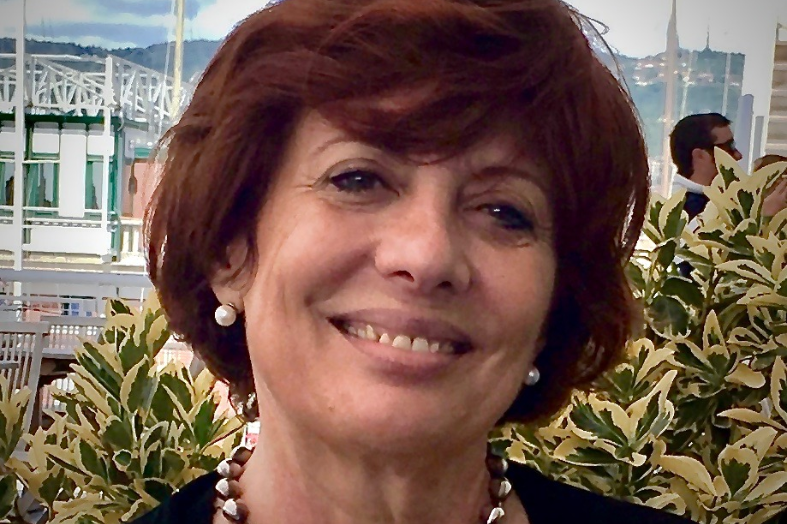
Carla Martinetto, Psychiatrist, Psychotherapist with a focus on phenomenological-existential and Gestalt therapy. Formerly Director of the Simple Residential Structure of the Mental Health Department of the ASL TO 4 of the Piedmont Region. Trainer and supervisor of work groups and schools of counseling and psychotherapy on topics such as therapeutic communities, psychotic and borderline experiences, and work group management. This interview is the result of two meetings, three months apart, during which the dialogue opened up endless possibilities and avenues for development. Space constraints on the content to share with the reader inevitably detracted from the richness and inspiration that Carla Martinetto generously shared.o.
In your opinion, what is fear? Today, I have the impression that neuroscience or theories that describe human functioning solely through neurotransmitters, as if people were simply machines that have received a stimulus and respond, give fear a mechanistic meaning. We are a product of culture. So, for me, fear is also a product of culture; it is a human response, with cultural meaning. What does fear mean to you within the culture of psychiatry and/or in your professional experience?
I agree with the focus on the reductive meaning of fear, which is quite ubiquitous. I’ve explored some definitions based on Galimberti rather than other authors: fear is considered an emotion we share with animals, and therefore something instinctive in the face of danger, to which we react in a predetermined and innate way. Reflecting on this, I’d say that fear in humans is expressed in a variety of experiences, feelings, and emotions, ranging from anxiety, to uncertainty, to dismay, to the uncanny, to the unsettling, to anguish, to terror… Fear takes on a series of human declinations that have one thing in common: the perception of being at risk, which, in fear defined in a more neurobiological sense, is the feeling of being at risk in the face of an external danger. In humans, with all their complex awareness, fear is no longer simply a real and concrete danger to be avoided in the environment, but something that can be imagined, perceived: it is a feeling of being at risk for one’s existence in very different ways, greatly varying depending on the situation. Therefore, it can take on a fundamental, existential meaning: anxiety can already be a more complex form of fear; not to mention anguish and restlessness and everything that concerns the relationship with the environment, even just the perception of an atmosphere. It may concern the meaning of my existence, I may sense a profound insecurity or fragility, as in anxiety or anguish, I may even no longer perceive the meaning of my existence or of the world, or I feel the continuity of my existence broken, as in the experience of terror or trauma.
I’m also struck by the fact that you used terms that I sometimes associate with a feeling rather than an emotion, and therefore with a cognitive component, along with our perception. So, what does it mean? Because for me, an emotion is something extremely intense, embodied in the body, but also short-lived. Fear is lifesaving, so what are these environmental dangers? What are these internal dangers that we can experience, that we perceive? And on the other hand: what is fear for? There is a danger, and what is fear for: to avoid danger, to defeat danger, to activate resources?
I found Jonas (1990), cited in an article, who wrote and theorized precisely on the cognitive properties of fear. How fear, therefore, both emotionally and cognitively, can be a signal of something that can activate our protective behaviors. Protectiveness understood as a prediction: he linked it closely to the risk of technology. He imagined the developments of technology, which evolves despite us, as it has its own autonomy, and consequently the end of the human being. Imagining this scenario can arouse in us a sense of dread, a feeling of dread, which he ascribes to moral, spiritual sentiments. Something more complex, as you say, in human beings, which are not primitive, basic emotions with the most common reactions of paralyzing and fleeing, much less reacting with anger. Discarding all these basic reactions, it can instead become a trigger, something based on the principle of responsibility, which can activate our sense of responsibility to envision scenarios, implement corrective behaviors, or at least alert us, to keep us vigilant for a potential risk. He placed it on scientific and technological developments. To get down to the concrete, a case discussion in the clinic where you imagine all the scenarios of a certain intervention, or of a lack of intervention, or of an alternative intervention, and which are accompanied by a certain degree of fear of what might happen, which can then become alarm…
…fear becomes the stimulus for prefiguration…
… per dare un orientamento nella prefigurazione. Non tutte le prefigurazioni sono equivalenti, ma l’aspetto emotivo della paura, del timore può darti un orientamento quasi istintivo, molto più veloce di quello cognitivo.
When you introduced Jonas, you mentioned fear of advancing technology. I mentally translated it as “out of my control,” and made a connection to adolescence, which is perhaps the time when we feel fear most consciously and intensely. We feel it as children, too, but I don’t know if we can fully understand it when we’re children. At that point, it guides us toward more instinctive responses, toward the search for safety, connection, and connection. Perhaps fear changes as we enter adolescence, where we experience what’s beyond our control, and perhaps this begins to scare us. Is it possible that fear changes at different ages?
I’ll tell you right away, yes. There’s an age like mine, which is already old age, where fear has very different hues than that found in adulthood or youth. I’ll introduce the second part of my answer, still delving into the world of philosophy, bringing you the ideas of Miguel Benasayag, an Argentine philosopher, psychiatrist, and psychoanalyst working in Paris. He was imprisoned at twenty as a guerrilla fighter, then expelled. For him, fear is the perception of one’s own weakness or of any loss; it’s a situation in which the world around us has its own stability. For him, the current era has no stability. He had a deep faith in the fact that positivity, justice, goodness, the struggle of the Indians, the struggle of the Argentine revolutionaries, would win sooner or later, whether they died or not. He had hope in being able to help those who were victims of torture. Now he says that Ukrainians are being sent to him for treatment, and he doesn’t know how to help them, even though they have suffered fewer atrocities than the Argentines, even though they have much more freedom, many more tools.
It is precisely the cultural structure, the way we inhabit the world, that has changed. It no longer supports the exclusively cognitive, rationalistic structure, according to which good would have won, there would have been human justice. In theory, mastery of the world would have allowed us to increasingly draw closer to goodness, to being good. According to Benasayag, today this paradigm has shattered; it’s not just someone who thinks well who is good in and of himself. It’s precisely our relationship with the world that has changed. Peoples of non-Western cultures exist in a temporality, a cyclical dimension, in which man is within nature. According to Benasayag, with Descartes, Western man himself placed himself in exile from the world: I study the world, I am me, the world is there. Now we are all in a dimension of uncertainty, of fear, in which we no longer know what holds us together.
As a therapist, he could then rely on the solid and secure world of values and ideas. While the collaborator, who betrayed his comrades, rejects that world because he feels like an outcast, stateless with respect to all sides involved in the war. Benasayag, with his patients, pretends not to be a tortured revolutionary himself; indeed, he takes it out on the revolutionaries, little by little he manages to go through this highly refined therapeutic process of personal reintegration. He can do all this, even temporarily stop being himself, because he has faith in the sense that humanity can improve humanity, can pursue goodness, justice… to be able to fish for something, if there is one, he also speaks of going to see if there is still a gram of humanity, a gram intact at the bottom of these people tortured so cruelly for months. An attempt to recover something alive within these people who are already dead, yet alive.
As a teacher, I try to convey affection and interest to students, and this leads some to become closer, while others distance themselves. This proposal of a relationship, clearly within the confines of teacher and student, leads them to experience their fear much more intensely during the exam, as if they were afraid of losing the bond, the affection, the support. It’s as if they can’t receive a welcoming look, or feel the pleasure of meeting, regardless of their level of knowledge of the subject. This proposal of a relationship further fuels their fear.
I’m reminded of the epochal change in our work over the past forty years: previously, relationships of human interest, much richer in human terms, like the one you describe, were liberating. They offered enormous recognition to those who felt, for a variety of reasons, weaker and more marginalized. So offering a relationship of great human value was a key to establishing a fruitful, enriching connection. Today, it makes much more sense to offer a relationship that demonstrates coherence, stability. There can also be coherence in the incoherence of today’s world, right? So coherence is social: I feel coherent with the environment around me. It’s not a given. Coherent in the sense of being stable within myself. It can also be very flexible, with great paradoxes. Perhaps coherence isn’t the right term: it’s the sense that I am the one steering my existential ship and that even in the storm, I somehow try to keep my existence afloat.
In Gestalt Psychology, we support people in facing increasingly greater levels of uncertainty, because as we approach full contact, the fear of blurring our boundaries and losing ourselves in the other increases. We could say that every relationship always encounters a certain level of fear. Perhaps fear is part of the relationship, or perhaps it is the relationship that creates fear.
Phenomenologically, it is called anguish, this is the basis of being human. For Sartre and Basaglia, the neurotic situation is seen as a situation of bad faith towards one’s very foundation as a human being. The very foundation of being human is anguish, regarding the meaninglessness of life, therefore, regarding something even more radical than simple fear. It is not the fear of losing one’s psychic or physical life, of dying or going mad. Anguish refers to the sense of meaning of existence; the person continues to be alive, but there is no point in living, there is no meaning in life within, and there is no meaning in life itself. Basaglia (1964) describes the neurotic situation as an existential case of bad faith; the individual lies to himself and seeks certainties that cannot exist with the dimensions of fixity and regularity he claims to require; they therefore become symptoms. Instead, it is the human condition that is interwoven with a sense of our own fragility, and therefore with the fear of our own fragility and of the world that overwhelms us and collapses. In the face of this fragility, we individuals are often powerless: we must live this human condition deeply, managing not to give in to impotence, but becoming political subjects, subjects of ideas and change.
Moving from Benasayag to Basaglia, we talked about grounding, cultural connection, identification, aspects that lie in the background and, if they emerge, can help me meet others, support me in the other. So what if I meet these people in fear and the other is also in fear?
It’s not the same level of fear. The frame of reference has changed: it can no longer rely on the faith that, for example, the war will end. Because we’re not sure the war will end, we’re not sure dialogue will win. According to Benasayag, certain frames of meaning have broken. He is very radical in these frames of meaning that gave meaning to even the most disastrous situation; for example, they would massacre you in a village, only to start building again the next day. For him, these frames of meaning, which relied on pure rationality, are now irreparably violated. It’s no longer possible, by understanding more and more, to reach a solution. We can find other frames of meaning, other ways of inhabiting the world, but they are no longer the same. As Jonas said, if fear is linked to a disastrous evolution in my life, I try to change direction. What Sartre and Basaglia and all the phenomenologists talk about is something that can’t be avoided: I would be afraid of my human condition; it would be like avoiding being a human being. Fear shouldn’t be avoided, but embraced. From this awareness of finiteness, of precariousness, of existence, we can move beyond it, starting from this.
In Sartre’s Nausea, the protagonist is on the verge of suicide and wonders whether his own existence is any different. What difference does it make if that tree is there or not? What difference does the world make whether I’m here or on the other side? He enters a café and is struck by the singer’s voice. He feels that in that moment he no longer feels this nausea for life. Then he began to question himself: when this woman sang, she couldn’t know whether what she was singing would reach anyone or not. Whether it made sense or not. A wave of life came to me in the midst of all this deadly sense, but the singer will never know. Perhaps I can’t give up living just because I can’t find its meaning? In phenomenology, we generally speak of anguish, that is, the fear inherent in one’s condition, the fear inherent in the fact that you are aware of your existence.
Unlike animal fear, in which the animal fears external danger and is afraid of dying, humans are afraid of living: they realize they are living, therefore they are afraid of living.
The fear of death in animals is instinctive and predetermined: they fear something from which they instinctively flee without any awareness of death. The fear of death in humans is awareness of their own death.
Could it be a fear of living, of continuing life, generating…?
I believe fear has to do with a sense of our fragility: the world is bigger than us, we are at the mercy of nature, and Covid has highlighted this clearly. I believe awareness has been affected in ways we will see in the years to come: the loss of trust, the sense of brokenness, that life could be turned upside down… There are a whole series of signs, of which Covid is one, that are rooted in the decadence of Western thought: living in a situation of such insecurity, even violent during the Covid era, when we didn’t know whether we could master it or not, has not been repaired, is not repairable, it has exposed our fragility.
Reconnecting with Basaglia and Sartre allowed us to re-experience that fear inherent in our humanity, which perhaps we’re trying to avoid at all costs these days.
This could help humanize our lives. In a state of hypersecurity like ours, where if a person has absolutely nothing—no money, no culture, absolutely nothing—but has social media… existence often seems increasingly empty, vacuous to me.
We need to grasp our uncertainty, our fragility, our humanity: our humanity is fragile. Its richness lies in its fragility. Can humanity be strong, right? Humanity is fragile because it is made of sensitivity, of affection, of being touched by others, of being shaken by things.
Man isn’t strong, but he can live strong. I’m reminded of full contact, where you feel a shock that hits you, composed of a whole series of emotions and energy. It’s nourishing and also overwhelming.
Precisely!
If we try to connect fear and pathology, how can we connect these themes? We mentioned neurosis, but there are other relational states, even existential ones.
In severe forms, fear quickly becomes either terror or anguish; it quickly becomes something much more extreme. In a person with a psychotic experience, fear is an unbearable anguish, which takes the form of crutches in withdrawal, delirium, and voices. It’s not fear; it becomes anguish about oneself and the world, or even terror. I believe the psychotic experience reveals to us that, to survive, we need meaning more than bread. Therefore, it’s unbearable for human beings to live in a world stripped of its meaning, in an ontological uncertainty, in an insecurity that undermines the very foundation of our existence, not the quality of our existence. Perhaps it’s more unbearable than hunger, or perhaps it’s a psychic, existential hunger. The encounter with a psychotic person can generate a fear in us that threatens our integrity, that can uncover our carefully set-aside knots or our most primitive or archaic dimensions. It can infect us with what Jasper (1983) called the limit situations of human beings. These can fascinate us because they allow us to explore new territories, or we avoid them because we are afraid to explore those territories that lie beyond our own constructs of meaning.
We’re drawing a kind of map. We’ve touched on fear; the anguish of existence and death, as a constitutive part of being human; we’ve touched on fear in neurosis, in relationships that aren’t what we want and that we’re therefore unable to inhabit. Are there other modes of relating between neurosis and psychosis?
There’s the ever-expanding field of personality disorders. The person is forced to live an amputated life. In psychotherapeutic terms, they dissociate themselves from a whole swath of their past, their existence, their emotional dimension, to avoid contact with the trauma. What is trauma, if not something that has violated your ability to exist? Physically, war trauma, neglect, psychological abuse… In neglect, think about how violent it is to not be present in the relationship, how violent the effect of the caregiver’s not being present in the relationship can be. So much so that the person then develops amputated ways of existing.
Second part
Let’s resume our discussion on fear in this second meeting.
In the previous meeting, we touched on the social aspects of fear; now you suggest we focus differently. Both in my professional and personal life, fear is present in other forms, such as anxiety and anguish, and they are often confused. By sticking to a narrower, more essential definition of fear, we find it as a way of sensing the environment, but also of reacting to it, a way that extends across the animal world. Therefore, it is the most archaic, the most instinctive.
Fear has remained in the background, as the term fear is often used in our work as a mask rather than a state of anxiety or contact with life’s uncertainty, the uncertainty of choice, or personal insecurity. Fear seems to me to be characterized as an emotion and also as an immediate reaction: immediate reactions include flight, paralysis, and aggression. They are the same between us and the animal world, with an immediate bodily transition. There isn’t much of a sensation of fear. I may even have it, but then it correlates with neurovegetative aspects that then fade into anxiety and other types of phenomena. When fear erupts, it seizes existence, invades it, dominates it, shatters that moment, and you act accordingly in true fear. There isn’t even time for fear; the bodily response immediately transitions into bodily paralysis.
Can you tell the difference between fear, anxiety, and anguish?
The key difference is that in anxiety and anguish a self-awareness emerges, there is something of self-consciousness to the whole sensation.
From sensation do we go to perception?
I don’t know whether to call it perception, more of a complex sensation… Precisely consciousness in the phenomenological sense: self-awareness, the cornerstone of being human, the knowledge that we are alive and that we can die. In fear, you sense a threat and react to it; animals aren’t aware of being alive and capable of dying. While anxiety begins with a fear of death, of our vulnerability, of a sense of threat, which involves the awareness that we are alive, vulnerable, exposed to threat. Furthermore, the threat isn’t clear, there’s no possibility of escape. So if I’m afraid of a car hitting me, I freeze, run away, etc. If I have an anxiety attack when faced with a car, I don’t know what to do, I don’t even know exactly why I’m becoming anxious.
So there’s an awareness of the danger to life, which continues amidst confusion about how to respond to the environment. The person senses a danger they can’t identify, and so they become confused and fail to respond.
Anxiety is a reaction, a signal of a discrepancy: there’s something dangerous in my life and in my environment, something I’m unfamiliar with. It’s a contact with the awareness of one’s own existence within the vulnerability of human existence and therefore of the meaning of human existence.
In anguish, it’s even less identifiable; there’s no perception of danger. Anxiety is an indistinct perception of danger, while in anguish, my existence is already crumbling; a feeling of the nullification of the meaning of existence: you’re alive, but you no longer know what the point of being alive is.
In this sense, however, anguish also requires a basic cognitive process because the person begins to ask himself who he is and what meaning his existence has.
This is also true with anxiety. I ask myself, “I’m alive, but what’s happening to me?” Life stops. Anxiety is intrusive, it makes me feel weak and fragile, while anguish makes me feel more helpless, more entangled, a more swampy feeling.
Anxiety is a dangerous indistinctness, in which one is still in contact with the environment, while in anguish the attention is brought inward, consequently the sensation amplifies and becomes something pervasive and destructuring.
Yes, anxiety in our linguistic sense has a strong physical effect that’s similar to fear, so you have palpitations, sweating, you may tremble, you may feel suffocated. Anguish is more characterized by a blockage or a heaviness, a bodily sense of heaviness; the body no longer feels as alive, as vital as it does with anxiety; you don’t have tachycardia or other neurovegetative symptoms…
…in anguish does the body actually begin to shut down?
Yes! Fundamentally, fear is based on fear for our integrity, the risk of death. If I think back on my experiences, I was raised by a father who thought that by making me feel fear, I would grow up better; therefore, he exposed me to several devastating experiences in this regard. I remember the terror of the first time I learned to swim, when he threw me into the water without warning, and consequently afterward I tried to make sure no one could grab me from behind and throw me into the water and make me experience that fear of drowning.
We try to live by avoiding situations of fear and terror. We try to protect the child and provide him with what we call existential certainties. We try to provide antidotes to feeling so fragile in our lives, so exposed to fear; fear would prevent us from living.
Fear, as described in your experience, seemed like a guideline for approaching the environment. An educational approach, questionable today, to approach the environment, while today it seems to me that young people are immobile when faced with a fearful experience, as if fear can only block them from the environment.
I agree. In other situations, we adopt avoidance strategies, such as fainting or dizziness when exposed to dangerous situations. We implement safety devices to avoid constantly being exposed to fear, which would be devastating; we couldn’t plan for it if we were constantly consciously exposed to our vulnerability. I agree with you that they also risk being factors that distance us from fear, that protect us from vulnerability, from the sense of death, but that also distance us from an authentic connection with life. The Western mentality is that death seems to be in our hands: we have all the technical solutions, the medical solutions, or if there’s no solution, we die because there’s war, an earthquake… we have a mindset of acquiring greater control over everything.
…in medicine this is taken to an absolutely extreme extent…
Yes, even with respect to death, contact is minimized and increasingly anesthetized, in some way, cauterized. It’s no longer part of a collective ritual; in the DSM-5 framework, mourning, if prolonged, already becomes depression; there’s no longer even a time for mourning. Grief becomes pathological and therefore treated, not experienced or lived.
As if fear were something that was wrong to experience.
Yes, instead of an opening to the meaning of life, to living. The question arises: should we have faith in technology or faith in ourselves? In relationships with others? A fundamental faith in life? We must have faith and believe, almost as if it were a God who will solve everything, any problem, and make us strong, invulnerable, which is a lie. It’s a mythology, excluding those who have faith; they are absolutely inauthentic ways, phenomenology would say, of addressing a more real problem: humans, unlike animals, know they will die.
Both animals and humans experience fear; the difference between us and animals is that we are aware that we can die. So, have we fallen into anxiety, anguish, or are we still in the realm of fear?
I think we’ve ended up more in anxiety and anguish, where fear becomes an awareness in us—I don’t know how, we’re talking about a tree that then develops different branches. In humans, fear gives rise to an experience: in my childhood memories, I wasn’t anxious, I didn’t know I could die. I knew I’d been sick and that I didn’t want to feel that fear again.
Around the age of 10 or 11, I began to implement avoidance strategies, a sort of anxiety or fear, the ability to anticipate fear and not want to experience certain sensations.
This is one way fear guides us in exploring the environment and the choices we make. It comes to mind that I started climbing because I suffer from vertigo. On the one hand, I began climbing with the reasonable certainty that I wouldn’t die, because I had the safety gear and it allowed me to lower my fear levels. On the other hand, there’s the excitement in fear.
This element of excitement is undoubtedly there. In my personal experiences with a parent who today we might call sadistic, I couldn’t experience the excitement, but only the danger. At a certain point, the internalization of fear kicked in. Then, just the slightest stimulus, like in a pack, triggers anxiety and triggers everyone’s reaction of flight, distancing, and avoidance.
At that point, I’m no longer even reacting to the stimulus in the here and now, but I’m turning to the acquired and memorized experience. Of course. Returning to the excitatory aspect of fear, how does fear actually become the stimulus to seek out danger? To challenge. The moment fear becomes excitement, I then seek out danger. I’m bringing the entire cognitive component into play. Because I choose, I see, I choose, and I deliberately go. And so I’m asking myself, what kind of fear is that?
Are there any mechanisms to manage fear? Why did my experiences go from fear to terror? Because there was simply no support. When you mentioned sadism, it occurred to me, in a conversation with Pizzimenti, that my parent’s sadism wasn’t in pushing me to experience an extreme situation of fear, but in not participating in the experience of fear. It’s in abandoning your experience that fear turns into terror, because you feel completely without a safety net, not even an emotional or emotional safety net. Even though I was convinced that deep down he loved me, an emotional safety net is something different from love: it’s the substance. Fear can become terror when it isolates you from everything.
It also isolates you from your environment, because if you’re on a baobab tree in the desert with a lion below who wants to eat you, you look for the highest branch. It becomes terrifying when you isolate yourself not only from your emotional network, but from your environment.
What you say, however, seems to me to isolate you more from your body than from the environment. That is, you still have the strength to act, you still have a fundamental faith in the antidotes to fear, you still have a fundamental faith that you can reach the highest branch. I think the reaction isn’t one of escape, but of activation, and if I’m in contact with the environment… then the answer to my previous question might be that I’m deliberately seeking out a fear that isn’t paralyzing, not the one that makes me retreat. It’s the one that allows me to activate resources. It reminds me of the tragedy of Antigone, recently staged in Turin: she challenges death to do what she thinks is right, that is, to bury her brother. She is faced with the choice of whether to live by betraying the constitutive laws of the human being, respect for the dead and her brother in particular, or to disobey the human laws, created by her uncle, which prevented this burial. In this Antigone production, with a group of young actors, to avoid having too many choices and thus finding themselves at a loss for what to do, they even called for a war like in Ukraine. In an extreme situation, resources would be mobilized; it would be clear which side to take. The individual can find their own voice. Whereas in a situation where everything is possible and there’s no direction, one’s resources remain blocked.
It almost seems that the greater the danger, the more energy it can mobilize. I ask you about your sense of responsibility. Could it be that today, especially for younger people, they don’t choose because the environment chooses for me?
Actors took little risk in choosing acting as a profession; in the end, they would have eaten anyway. So it’s not a choice with a high level of responsibility. In my opinion, it’s trust that allows us to withstand fear. It’s important to withstand fear. Trust in the essence of existence, trust in oneself, and trust in the world, including humanity. And it’s also trust in existence, the very basic trust.
There’s a Sardinian legend, in which the angel of death kisses newborns on the forehead, to make them forget that one day they will die. Schizophrenics are newborns who would never be kissed; they are therefore constantly aware of their own death. Presence is costly; we cannot live in the constant presence of our death. And so there must be an angel, a fundamental trust that something will be there, which supports the fabric of our lives.
What do we do with fear today, in this society?
Today, fear is rife: dangerous sports, increasingly dangerous and devastating drugs… They come with, as you mentioned before, technical equipment that ensures your risk is only the thrill, not the death. However, if you only experience the thrill, it’s not really fear. It’s a very complex issue, one in which you don’t fully consciously put your existence at stake. Let’s think about how far we are from an awareness of our existential uncertainty: will we be here tomorrow? Because it takes strength to endure this, as we were saying; it gives us strength, courage, confidence, hope.
As if at a certain point, young people right now, but not necessarily only them, were entering an existential boredom. Knowing that nothing is dangerous makes the environment and the experience of life somehow boring. It’s not just fear that keeps a person alive, because it can also be the encounter with others, sexuality… But perhaps part of this boredom is linked precisely to the lack of the opportunity to experience fear?
But also the possibility of fully experiencing existence, which also contains fear. Not at the devastating levels of those who haven’t been kissed by the angel, which is pure devastation, but being able to confront it, that is, being able to remain ourselves, confronting ourselves while aware of the precariousness of our existence. This also gives value to existence, gives it meaning: against this backdrop, I try to live every moment I manage to experience intensely. This is also partly due to fear on an existential level, no longer a level of challenge from nature: Sartre pointed to the equivalence of possibilities, all possibilities are equivalent, there is nothing that pushes me in one direction. Choice is a totally personal responsibility, an act in which I affirm my life. Unpleasant emotions are typically the emotions needed to act, to choose, because they lead to change. If I feel anger or fear, I tend to change, and therefore I choose. Another image comes to mind, as if our society says: the important thing is not to experience danger, the important thing is to try to ensure that a person doesn’t experience fear. Today, a child is raised with all the care and attention of the parents, never their own responsibility. The climbing frames in children’s playgrounds of the past, the Swedish paintings in gyms… I was well aware that I shouldn’t hurt myself, that I had to be careful. Now, however, they tend not to give you this instruction, that you have to be careful about your life, but rather it’s the adults, the parents, who protect existence. There’s this cultural shift. There’s no longer a sense of responsibility, neither on the part of parents nor on the part of children; that is, everything must be protected by the environment, everything must be protected by the law, all of life must be protected by other devices, and no longer because I, the parent, give instructions, for which you, the child, take responsibility. The child must listen and take responsibility and make decisions about where to go, with the option of “saying, ‘I can’t take it anymore: help me.'” That is the fundamental support network and trust, but it lacks a sense of responsibility for oneself, for one’s life, and for the risks that life entails.
So it seems we’re going to say that: by not experiencing fear we are numbing the responsibility that each of us has?
Yes, fear leads us to take on additional responsibility and thus also to activate resources. I’d say responsibility has to do with becoming aware of one’s own limits. The limits of existence and one’s own limits. The concept of limits is a concept that is absolutely lacking these days. Formal limits are missing, let alone substantial limits. New ones will emerge, or we’ll hit our heads.
Once upon a time, playing also meant getting hurt. Today, even the slightest hint that our lives aren’t so protected, a small cut risks becoming a wound… for the body’s shell, it becomes not a superficial wound, but a mortal danger… there’s no gradualness. Perhaps our society doesn’t want to be afraid, and we see fear taking on a lighter dimension. There’s uncertainty, insecurity, a sense of caution, a timidity, even in the animal world: when they sense danger from afar, you see them begin to tread more cautiously, warily. So there are still instances where, at that moment, you sense life is a little more vulnerable, not yet in danger, there’s no overt fear. Even these much milder instances, like feeling insecure when crossing the street; being uncertain even just about buying the wrong product at the grocery store… in all life situations, we try to shield them and leave nothing to chance. Except for having codified spaces for chance, like holidays and sports.
We said that when faced with a danger in the environment, if our energy is high, it allows us to increase our responses and also unite with other people around us…
If I think of Franck’s school of existential analysis, our way of accepting or rejecting the precariousness of human life inherently shapes a world for us that is habitable differently. Therefore, it promotes activation or instead promotes withdrawal, a blockage, a scarcity of capacity, energy, and both personal and environmental resources. For example, if I walk the same street with different needs, I will see different resources: so if I’m hungry, I will see shops selling food; if I’m afraid, I will see places that can offer me shelter. The street is the same. So in this sense, it directs people’s energies, attention, and resources. To proceed, I propose that you reflect on fear and pathology.
The example of a great teacher of mine on fear came to mind: a patient of mine. A young woman, quite serious in terms of subjective suffering from the symptoms… even from the accusations she needed. She had some margins for managing her fear, which I thought were sealed, and which were essentially through dietary control and study. We were quite surprised, because patients usually came with anxiety, anguish, phobias, depression, sadness… and she would say: fear. An almost concrete fear, I’d say almost psychotic: in the sense that it was total fear. A fear that became more than the fear of death, but the fear of life. So it was life itself that was frightening: not being alive, life! She said that as a teenager, the future had hit her like a bomb, and it was hitting her. A sort of almost hallucination, in which the future crushed her, loomed. Temporality was shattered; there was a typical configuration, which Binswanger would have called depressive, where the power to move forward retreated into life, into holding on to the past. This fear was so great that she tried to block out her life, trying to remain almost an ephebic adolescent. So, no encounters, not even emotional ones, with anyone of the opposite sex, none of a sexual nature. It reminded me of the book The Tin Drum: her life was entirely centered on this, it was as if she had stopped at a terrifying childhood experience. My colleague and I, who saw her every week for medication, were like a parental couple, and we too became the source of fear. She would sit across from us, physically frightened, rigid, curled up, almost in the fetal position, with a terrified look in her eyes, and all this increased with every move we made to meet her. We became activators of fear and felt like monsters. Our feeling of hurting her was unbearable and triggered our irritation and aggression, so the situation became increasingly tense. It was more than 20 years ago; much of psychotherapy focused on having a good relationship, therefore on trying to build that relationship. We came to tolerate this feeling of being a monster she attributed to us, confident that we weren’t really monsters, decreasing our efforts to approach her. There was still very little reflection on measuring the relationship, and that in some situations, the relationship was somehow harmful or damaging. So we needed to be able to retreat to a protective distance for ourselves and the patient. And then, little by little—but it took months—the field began to settle down. What caused it to settle down? I don’t know. I think she needed to transfer onto us the threat she had perceived from her parents. She began to name worry, anxiety: an evolutionary shift from ancient, archaic fear to an awareness of herself, of her own moods. Today, after more than twenty years, she is an established professional, with zero social relationships. We imagined it was a somewhat schizoid world, a bit emotionally fragmented. When certain areas of affective activity emerge, her affectivity is very healthy: small, but healthy. What affective activity exists is linear and clean, without any distortion: what she likes, she likes; what she likes, she likes; what she dislikes, she dislikes. It’s as if, then, she’d been hit by that boulder of fear that had kept everything crushed, but a small island remained inside her. Over time, this boulder gradually melted, and very few areas emerged where she was able to avoid fear, like at work: there, something that had remained intact can resurface. She’s also had severe depressive episodes, so her crushed personality… I’d say a personality crushed by a fear that is total, affecting every aspect of her existence, even infecting the therapeutic relationship.
There was a miniseries about Basaglia a long time ago, and one line stuck in my mind: a person in a mental hospital asked Basaglia, “Am I crazy because I’m sick, or am I sick because I’m crazy?” And Basaglia’s response in the series was, “I don’t know.” I think that’s a very true answer. Here it becomes, “Am I pathological because I’m scared, am I scared because I’m pathological?”
I don’t know. If she studied for a subject, she’d immediately look at everything she was supposed to know about the subject and then be overwhelmed by it. Faced with everything, she felt like nothing. So she had to learn to break reality into pieces, so she could face it one piece a day, without mentally focusing on the whole thing. She lacked strategies for dealing with fear. I’m imagining when, in PdG, we say you have to attack the environment to be able to respond to needs. You do it in bites, so that they’re chewable for you. At this point, I’d like to return to a series of questions. What are phobias?
Let’s say it’s the opposite of generalized and indefinite anxiety: having a phobia means being able to pin down a generalized anxiety on a specific, avoidable object. Indeed, managing a phobia is all about avoidance. For example, a claustrophobic patient I treat prefers to walk up five flights of stairs to avoid taking the elevator. It’s a forced process, not a process of choice. Therefore, a phobia allows for avoidance where anxiety doesn’t offer any avoidance.
In PdG it is a creative adaptation that allows you to be in the environment, in the here and now as best as possible.
Then the object speaks, it’s symbolic, it tells us things. The choice of object is never random, so it’s possible to decipher that underlying anxiety.
A young woman patient of mine comes to mind who has a phobia of vomiting.
When faced with phobias, the first layer is the support needed to cope with those fears. In this example of yours: her parents rush in and save her, so she receives that support to continue feeling alive and hoping she has value in their eyes. She feels she exists, her existence has value, and therefore feels she will be able to overcome it and live beyond this moment of nausea and terror. Then, in this type of situation, the fear of vomiting is already linked to a phobia about her own body. It’s not about something outside, but something inside. Therefore, it has connotations closer to anguish, a severe form of confusion between herself and her environment, of contamination, of rejection of her own existence. Of rejection and desire to live: she wants to eat, therefore to affirm her own existence, but then she fears that her body is incapable of living and therefore she will vomit existence. It seems she has internalized the vomiting of her parents, who wanted her but reject her. They care for her, but they don’t support her.
So phobias are how we manage anguish and anxiety, how do we materialize them into an object? Do we think this gives us more control?
Control and avoidance. With varying degrees of severity: severity today cuts across diagnosis, so a diagnosis of obsession can be neurotic, borderline, or psychotic. Severity is fairly independent of the symptom: the symptom of obsession doesn’t automatically place a person at the neurotic level, as it once did. Today, I’d say we live in a society that seeks to numb life.
Perhaps to anesthetize death and the fear of the danger of death and consequently the fear of life, society’s message is “I preserve life”, but in reality it crushes life like a pancake.
Feeling life can be so energizing that you risk losing your boundaries.
A huge thank you to Carla Martinetto for her availability and generosity of time and content.
Bibliography
- Basaglia, F. (1964). Ansia e malafede: La condizione umana del nevrotico.
- Fritz, P. (2003). L’Io, la fame, l’aggressività. Milano, Franco Angeli.
- Grass, G. (1974). Il tamburo di latta. romanzo (Vol. 705). Feltrinelli Editore.
- Jonas, H. (1990). II principio responsabilità. Un’etica per la civiltà tecnologica, Einaudi, Torino, 49.
- Jasper, K. (1983). Psicologia delle visioni del mondo. Astrolabio. Roma
- Perls, F., Hefferline, R. F., & Goodman, P. (1997). Teoria e pratica della terapia della Gestalt. Astrolabio, Roma.
- Sartre, J. P. (1958). La nausea. Mondadori, Milano.