Nature is not beautiful, what is beautiful are the eyes of those who contemplate it.
2008, 2009, 2010… Night falls on our world. What to do? Silence? I feel sincere respect for all the artists who have dedicated and continue to dedicate their lives to art—by right or by circumstance. However, I prefer those who dedicate their art to life. I write in times of crisis and peace, in favor of art and aesthetics.
Art is not ornament,
the Word is not absolute,
sound is not noise,
images speak.
Augusto Boal, 2011, p. 4
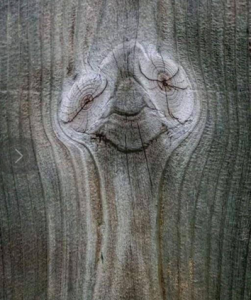
Gestalt
How can I make it clear that Gestalt is not just another man-made concept? How can I say that Gestalt is, and not just for psychology, something inherent in nature?
Fritz Perls, 2006, p. 59
With this article, I want to provide more background on the integration I’ve implemented in my clinical practice between Gestalt therapy and Music Art Therapy in the Globality of Languages, the Stefania Guerra Lisi Method (GdL). I’m particularly interested in highlighting some fertile points of contact between the two perspectives, in relation to the themes of awareness and organismic self-regulation.
For the Gestalt Therapy, aesthetic perception is understood as the “ability to feel” with the body and the senses, resonating with harmony and artistic languages, even if not always consciously. In organismic self-regulation, apparent initial manifestations of chaos and dispersion (entropy) may emerge, a prelude to the organism’s subsequent, vital phases (syntropy, Luigi Fantappiè, 2011). We often stop at the phase that frightens us, the sensation of emptiness, of disorder, not allowing the entire process time to reorganize. We interrupt the process, the growth, losing vitality, in favor of control. In this way, symptoms take shape, which for us are interruptions of contact, even though Gestalt therapy considers them a creative resource. A symptom is nothing more than the signal from which to begin again to grow. Systems theories show us forms that create themselves, autopoietically, in nature and biology—when unhindered—(Varela and Maturana, 2001). And life reorganizes itself anyway, even in the presence of obstacles. The same happens with our relationship with ourselves and the environment.
According to the GdL, starting from the body and its contained memories, our specific Art of Living is created. We can recognize symptoms and stereotypes as a map of each individual’s personal history, even in the presence of severe psychophysical limitations. We can then, with this map, begin again from interruptions, from the innate and autotelic capacity (activities performed for the intrinsic pleasure of doing them):
“… that the child creatively expresses, to teach us to communicate…” (Guerra Lisi, S., & Cappelletti, T., 2020).
In our work, we encounter these open gestalts as a spontaneous art form. Just as in nature, pearls arise from the need to limit the suffering caused by the friction of a grain of sand in the soft tissue of a mollusk. Through a Gestalt lens, we see interruptions in contact and the process that structures them into sophisticated and complex creative adaptations, as part of the process of self-regulation toward the best possible goodness of the moment (Perls, Hefferline, Goodman 1971). Similarly, the GdL speaks of picking up the thread where it has been interrupted in personal, psychophysical, and cultural history, restoring what it defines as:
“the development of the envelope”: from the inarticulate to the articulated, is a law of organic growth, of the continuity of human evolution from prenatal life to death, and perhaps beyond. The typical modality of evolution is trans-formation, the Metamorphosis. The social womb, a natural extension of the maternal womb. The GdL has among its fundamental objectives the training of everyone to fulfill this role, developing the primary caregiving skills with which we are all naturally endowed. In this, the GdL opposes the easy delegation of care to specialists, who are necessary but not sufficient.
https://www.disciplinaglobalitadeilinguaggi.it/concetti-e-principi/
The concept of womb, maternal or social uterus for the WL, is very close in this case to that of background for Gestalt. The concepts of inarticulate/articulated also recall the process of constituting the figure/background that articulates or disarticulates images and perceptions, relating to emerging needs and the tensions that press toward their satisfaction, perceived on an aesthetic-sensorial level. Becoming aware of one’s own interruption of contact is a complex process, revealing vulnerable parts. Can I sustain this awareness? How much of the encounter is assimilable enough for me to remain aware of it?
This question recalls the architecture of the book “One Thousand and One Nights” (Dominicis, A. (Trans.), 2015), where Shahrazad tells a new story every night to the great king Shahriar, so as not to die. The king is famous for inviting a different woman every night and then having her killed the next morning. Disappointed by his wife, he wants to avoid getting involved and seeks new company every night. Here, the “novelty” comes at a high cost—the killing of a woman a day—and simultaneously repeats a pattern. Thanks to her inventiveness, Shahrazad, however, is spared night after night. This happens because she has piqued the king’s curiosity about another “novelty”: the next story. The pattern is interrupted. In this way, the gestalt opened with his wife is closed, the past, modified by new experiences, recedes into the background, and the king, without realizing it, re-enters the game in the present, risking new disappointments, given the greater value attributed to the new story, which will arrive in the future.
In the theoretical framework of the SGT (Gestalt School of Turin), we speak of an experience that heals experience (F. Perls, 2023, p. 8). What “heals” is the possibility of intentionally having new experiences as alternatives to old ones and accessing the awareness possible in that moment of what is happening and what has changed. In this way, the person gains a new perspective, increases their complexity, increases their awareness, and broadens their range of possible choices.
Art does the same in all its forms, often decontextualizing, moving away from the same, repetitive patterns, helping us see things from different perspectives. It extracts the symptom, the discomfort, from within; by depicting it, it allows us to see it from the outside and allows us to make transitions of alienation and identification with it.
Art can also be understood as movement of the body, which generates works with the “limbs”:
I can affirm, after forty years of pedagogical and therapeutic research and experimentation, that making a human move means considering not only the arms and legs as limbs, but also the gaze, the thought, the word, and the traces in various languages, which are extensions of them. The evolution of the species consists in the expansion of this possibility of movement through the limbs and the arts, for an ever-increasing power over space and time, to the point of going beyond the confines of physical presence or existence, with the possibility of leaving traces of the mind: writing, poetry, painting, architecture, “objects” marked by the quality-quantity of use, and above all projects, images, actions.
(Guerra Lisi, S., 1999 http://www.soundbeam.it/documents/guerra.pdf).
L’attivazione delle nostre articolazioni fisiche, mentali, emozionali e progettuali, è anche un funzionamento nel quale esercitiamo le diverse funzioni del sé, che la Gestalt definisce come: funzione es, funzione io e funzione personalità. Il sé si sperimenta esplorando e manipolando con la funzione es per conoscere noi stessi e il mondo, renderlo più avvicinabile, contattarlo; con la funzione io per imprimergli le nostre tracce, con opere di cui è artefice, a qualunque livello esse siano; con la funzione personalità per digerire, assimilare, elaborare sempre maggiori informazioni a tutti i livelli. L’intero processo di contatto organismo/ambiente esprime il sé in azione e la sua crescita. Le interruzioni di contatto e gli adattamenti creativi nati da esperienze non ancora assimilate, idee e concetti frutto di stereotipi e credenze, sono il luogo fertile del nostro lavoro gestaltico, volto a sostenere il ripristino dell’autoregolazione omeostatica (Perls, Hefferline, Goodman, 1971).
In un contesto sufficientemente sostenente e sicuro possiamo osservare nel bambino comportamenti più liberi, legati al piacere di lasciarsi andare al flusso creativo e al vivere l’esperienza sensoriale del momento, in quella che Perls definisce concentrazione spontanea (Perls, Hefferline, Goodman, 1971). Lo stesso è possibile per gli adulti, attraverso facilitazioni e dinamiche che destrutturino schemi e rigidità acquisite, ritrovando la fiducia nel corpo e nel sentire. C’è una forma di bellezza in tutti i processi biofisici e relazionali che governano la crescita della e nella relazione organismo/ambiente. E c’è valore e bellezza in tutto ciò che facilita il mantenimento, la cura e la sopravvivenza di questa fragile e delicata complessità, se osservata con curiosità, interesse per il dialogo e i costanti riequilibri adattivi, che avvengono tra meccanismi automatici e creatività umana, in tutte le sue forme. La bellezza della natura, nella quale possiamo specchiarci, può essere osservata, dal grande al piccolo, nelle geometrie frattali, (Benoit Mandelbrot, 2018) come in quelle delle strutture atomiche e cellulari del nostro corpo, “buone forme” in costante riequilibrio di simmetria e risonanza, fissate poi nelle arti dalle figure geometriche e mandaliche, nei rosoni delle cattedrali e simili. Il contatto con l’ambiente e la sua esplorazione nel piccolo e nel grande, avviene tramite la nostra capacità estetica, che la GdL intende nell’accezione della parola greca AI-STÊTIKÒS, essere sensibile, capace di sentire. È la mia consapevolezza o meno di ciò che provo, che sento, che mi consente di attuare o interrompere il processo di contatto in una o più fasi: dalla confluenza del pre-contatto e della funzione es, a quella di selezione delle alternative migliori e del contatto pieno della funzione io, all’assimilazione/ritiro del post contatto della funzione personalità (Perls, Hefferline, Goodman, 1971).
Again in Gestalt Therapy (Perls, Hefferline, Goodman 1971, p. 264), the authors state:
The important part of the psychology of art is not found in the dream or in critical consciousness; it is found (…) in concentrated sensation and in the lucid manipulation of the material medium. With clarity of sensation and play toward the medium as essential acts, the artist accepts his dream and utilizes his critical intentionality: and he spontaneously realizes an objective form. The artist is well aware of what he is doing; after finishing, he can show you in detail the steps taken; he is not unconscious while working, but neither is he primarily carrying out a deliberate calculation. His awareness constitutes a sort of middle ground, neither active nor passive, which nonetheless accepts the conditions, concentrates on the work, and matures toward the solution. And it is the same for children: it is the clarity of the sensation of free play, apparently aimless, that allows energy to flow spontaneously and reach such fascinating inventions. In both cases, sensory-motor integration, acceptance of the impulse, and assiduous contact with the new environmental material are the elements that produce valid work. Yet, all in all, these are rather particular cases. Both works of art and children’s games consume little social wealth and will therefore not lead to harmful consequences. Can the same middle ground of acceptance and growth operate in adult life during more ‘serious’ actions? We believe so.
Boal says:
In the past, I wrote that to be human is to be theater. I would now like to expand the concept: to be human is to be an artist! Art and Aesthetics are tools of freedom (A. Boal 2011, p. 9)
Both passages bring to light a political vision of art, integrative of opposites, based on the unity of organism and environment in which nature/culture, rational/irrational, etc., are expressions of a field from which we are not separate. Overcoming fictitious polarities leads to a middle ground perspective, as in children’s games and artistic experience, where to integrate we must make the different parts—individual and collective—dialogue and collaborate with each other. If we consider the idea outlined by quantum physics research, we are not separate entities; differences serve to know ourselves more deeply (F. Faggin 2024). Rather than being in continuous competition in a dominant and oppressive key, the clash/encounter of differences becomes another way to know and create ever-new configurations of the relationship and of ourselves. This concept refers to what M. Pizzimenti says regarding the vital force of aggression as difference: aggression needs to be supported by sexuality and love to create a new framework for transformative and destructive force (AA.VV. M. Pizzimenti, 2015).
With art, we can have intentional, imaginative, and projective experiences, explore different identifications, reflect ourselves in the sensoriality of materials and forms, immerse ourselves and flow in emotions and situations, express concepts, and come into contact with parts that we feel are accessible and parts that seem confined to mystery. Our being organism/environment encompasses everything: from inorganic life to organic life, up to the information and organization underlying the systems themselves, the entelechies:
A grain of wheat possesses both potential and realization. A grain of wheat has the potential to become a plant, and the wheat plant is its realization (F. Perls, 2006, p. 10).
This implies that in every organism or set of organisms, there are deep, internal codes, starting from those of DNA, which contain the information to reach one’s own self-realization; at the same time, the environment, of which organisms are a part, can in turn influence and modify this line of tendency at an epigenetic level, with what is produced, born from the nature of that same organism (Ernesto Di Mauro, 2020).
As happens, for example, for us human beings with the creation of artificial intelligence and all the technology produced—aspects that could modify our very human characteristics as we have known them so far, in directions that will depend on our choices.
Technology, in any case, conditions our life and shapes it also in relation to its presence. The reality we live in the globalized world, determined also by the technological field, already expresses the fruits of applications and developments originating from human curiosity for growth and from an entropic and disintegrative risk. A self-regulation of the system is what an intentionality of re-humanization of relationship and contact can balance, as a syntropic and regenerative element. By this, I mean the healing power produced by new experiences, capable of creating alternatives to the pattern of separation and isolation, with experiences that support the emergence of community and aggregative processes. This is also possible in our specificity as Gestalt professionals, at the service of a broader harmonious growth through the work we do, based on awareness, the body, feeling, contact, and human experience in its differences. This is also what the GdL intends to pursue in creating training paths that help parents, teachers, educators, and therapists to welcome the body and its wisdom, starting from the prenatal phases and continuing into the broader Social Womb through the Arts and the Art of Living of what the GdL calls the Person Project.
In Greek myth, the first artificial intelligence inserted into a machine was born in Hephaestus’ forge: Pandora, commissioned by Jupiter as a gift to be sent to Epimetheus, brother of Prometheus, known for having favored human beings with the gift of fire and the reflective knowledge associated with it, as his name indicates (Pro-metheus), thinking before acting. His brother Epimetheus is the opposite polarity (Epi-metheus), impulse, acting before thinking. The two brothers seem to represent our own polarities and the need to integrate them within ourselves to be able to seize the opportunity represented by Pandora: her having released “all evils” allows the human being to experience them and be able to face and transform them with a vision of development, “the hope” remaining in the jar. This vision is the ingredient needed to not stop in the middle of the process and reach the end of the work. It is a fundamental ingredient in every new undertaking and paradigm shift: if on the one hand there are excitement and vitality that give the push to movement, on the other we need to reflect, evaluate costs, and take responsibility for choices that involve risks, which are nonetheless indispensable to not stop growth itself. The evolutionary vision of hope is fundamental for modifying experiences in which we think there is “nothing more to be done” and we abandon in their distance those who appear incomprehensible to us due to culture, symptoms, or stereotypies. Without a vision and a perspective of development, we do not perceive the deep wisdom and communication underlying those differences, those symptoms, and those stereotypies. Adopting a new point of view makes us welcome the other in their diversity, discovering that what they manifest also belongs to us and we can take care of it with presence, reducing isolation and arriving at a common “poetics” (from poiesis, to make-create) and new paths, methods (from methodos, way-road), to travel together.
I close with two suggestions on these themes and visions:
A parable, (from 101 Zen Stories, no. 18, 1973, also known as The Man and the Tiger and attributed to Lao-Tzu) and a passage taken from Zen and the Art of Motorcycle Maintenance (R. M. Pirsig, front flap, 1981).
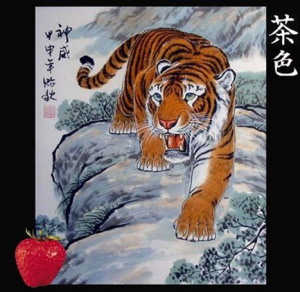 The Man and the Tiger.
A man walking through a field encountered a tiger. He began to run, chased by the tiger. Reaching a precipice, he caught hold of the root of a wild vine and swung himself over the edge.
The tiger sniffed at him from above.
Trembling, the man looked down, where, at the bottom of the abyss, another tiger was waiting to devour him.
Only the vine held him. Two mice, one white and one black, began to gnaw away at the vine.
The man saw a beautiful strawberry near him. Grasping the vine with one hand, with the other he plucked the strawberry. How sweet it was!
Zen and the Art of Motorcycle Maintenance.
(…) And the narrator asks: what is the difference between someone who travels by motorcycle knowing how the bike works and someone who doesn’t? To what extent should one take care of the maintenance of one’s motorcycle? While looking at brilliant blue meadows of flax flowers, an answer already forms: «The Buddha, the Divine, dwells in the circuits of a computer or the gears of a motorcycle transmission with as much ease as at the top of a mountain or in the petals of a flower.» This thought is the tiny lever that will serve to raise other immediately looming questions: from what does technology arise, why does it provoke hatred, why is it illusory to escape it? What is Quality? Why can’t we live without it (…).
Bibliography
- AA.VV. (2015). Aggressività e sessualità. Il rapporto figura/sfondo tra dolore e piacere (M. Pizzimenti, Ed.). FrancoAngeli.
- Boal, A. (2011). L’estetica dell’oppresso: L’arte e l’estetica come strumenti di libertà. La Meridiana.
- Di Mauro, E. (2020). Epigenetica: Il DNA che impara. Istruzioni per l’uso del patrimonio genetico. Asterios.
- Dominicis, A. (Trans.). (2015). Le mille e una notte (complete ed.). Newton Compton.
- Faggin, F. (2024). Oltre l’invisibile: Dove scienza e spiritualità si uniscono. Mondadori.
- Fantappiè, L. (2011). Che cos’è la sintropia: Principi di una teoria unitaria del mondo fisico e biologico e conferenze scelte. Di Renzo Editore.
- Guerra Lisi, S. (1999). Sinestesiarti nella globalità dei linguaggi. Borla.
- Guerra Lisi, S., & Stefani, G. (2001). Gli stili prenatali nelle arti e nella vita. Borla.
- Guerra Lisi, S. (2020). Foreword to T. Cappelletti, Educazione continua: Genitori educandi e figli educatori. ETS.
- Guerra Lisi, S. (2018). Progetto persona: MusicArTerapia nella globalità dei linguaggi. Ambiti di applicazione pedagogico-terapeutici. Armando.
- Mandelbrot, B. (2018). Nel mondo dei frattali. Di Renzo Editore.
- Maturana, H. R., & Varela, F. J. (2001). Autopoiesi e cognizione: La realizzazione del vivente. Marsilio.
- Perls, F. (2006). Qui e ora: Psicoterapia autobiografica. Sovera.
- Perls, F. (2023). Psicopatologia della consapevolezza: Un manoscritto inedito studiato e commentato da terapeuti della Gestalt. Astrolabio.
- Perls, F., Hefferline, R., & Goodman, P. (1971). La terapia della Gestalt: Eccitamento e accrescimento nella personalità umana. Astrolabio.
- Pirsig, R. M. (1981). Lo Zen e l’arte della manutenzione della motocicletta. Adelphi.
- Reps, P., & Senzaki, N. (1973). 101 storie zen. Adelphi.